
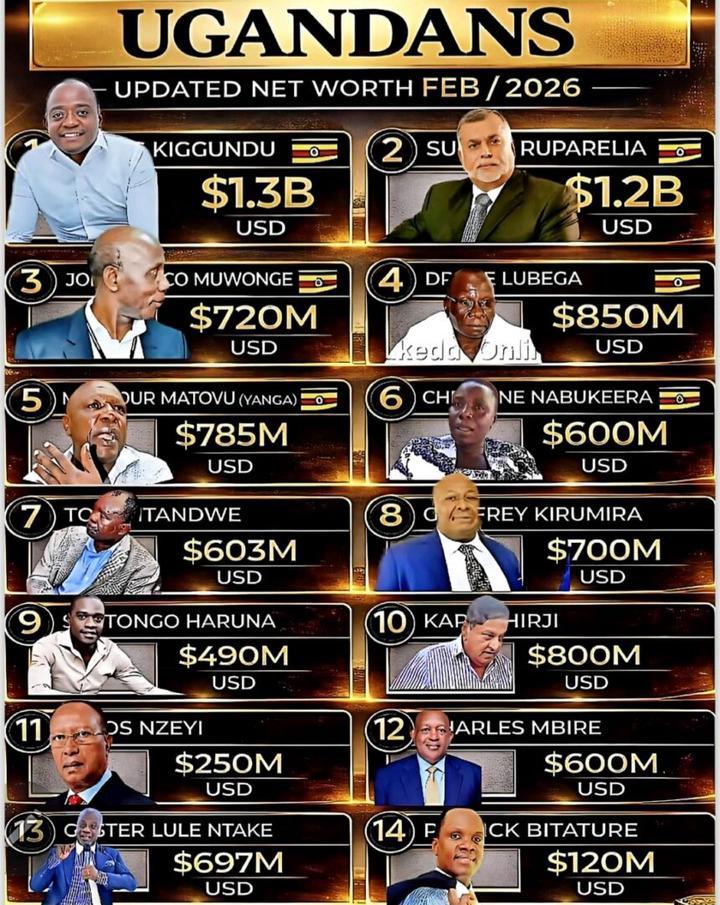
Look beyond the headlines and you’ll see that Uganda’s current crop of wealthiest individuals tells a story of steady economic building blocks rather than overnight fortunes. Stable prices, careful interest-rate management and a focus on bricks-and-mortar assets have quietly shaped who sits at the top of the wealth ladder in early 2026.
Property remains the clearest driver. Developers who invested in central Kampala corridors, especially around major infrastructure upgrades like the Nakivubo area, have watched land values climb. Businessmen such as Hamis Kiggundu and Sudhir Ruparelia stand out because their portfolios stretch across commercial buildings, hotels and mixed-use developments that generate reliable rents even when times are tough.
Others have built strength through diversification. Some combine real estate with petroleum distribution or manufacturing, creating cash flows that survive market ups and downs. A handful benefit from listed shares, such as stakes in mobile networks that pay steady dividends. This mix of strategies explains why certain names keep rising while single-sector players have slipped a little in recent informal rankings.
Macro stability has helped everyone at the top. Inflation stayed low through 2025, the central bank kept borrowing costs predictable, and growth projections for the coming year sit comfortably in the six-to-seven percent range. When prices don’t swing wildly and loans remain manageable, property owners and industrialists can plan years ahead instead of just surviving month to month.
The picture also shows where Uganda’s economy is heading. As oil projects move forward and urban centres keep expanding, the winners will likely be those who combine smart land choices with businesses that serve everyday needs. For younger entrepreneurs watching these names, the lesson is clear: steady reinvestment in real assets and openness to different sectors still beats chasing quick wins.
These are estimates drawn from public projects, corporate reports and business coverage, not audited balance sheets. Yet the pattern they reveal is encouraging: Uganda’s wealth creators are betting on the country’s long-term growth rather than short-term speculation.