
Sunday, March 22, 2026
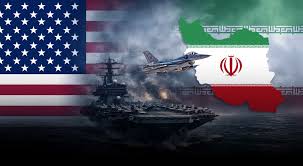
Three weeks and two days ago, the world woke up to a different Middle East. On February 28, the United States and Israel launched what Washington officially named Operation Epic Fury, a joint military campaign targeting Iran’s military infrastructure, government installations, and nuclear programme. The opening strikes killed Supreme Leader Ali Khamenei and dozens of senior Iranian officials. What followed has become the most consequential conflict of the 21st century so far, and today may be its most dangerous day yet.
Here is where things stand, from every angle.
THE TRIGGER POINT: 48 HOURS OVER THE STRAIT OF HORMUZ
The most urgent development today is a direct ultimatum issued by US President Donald Trump on Truth Social. In characteristically blunt terms, Trump threatened to destroy Iran’s power plants, starting with the largest one first, if Tehran does not fully reopen the Strait of Hormuz within 48 hours. That clock is now ticking.
Iran’s military response was immediate. The Iranian Armed Forces declared that if any energy infrastructure belonging to Iran is struck, all US and Israeli-linked energy infrastructure, water desalination facilities, and IT networks across the region will be targeted in return. Going further, Iran’s armed forces headquarters stated it is prepared to close the Strait of Hormuz indefinitely if Trump’s threat is carried out.
The Strait of Hormuz is not a peripheral waterway. Roughly 20 percent of the world’s oil passes through it daily. A prolonged closure does not just hurt the United States and Israel. It reshapes the global economy, and the people who would feel that first are not policymakers in Washington or Tel Aviv. They are ordinary families paying for fuel, food, and electricity across Asia, Europe, and Africa.
WHAT HAPPENED OVERNIGHT
Iran’s missiles broke through Israeli air defences in the south of the country overnight, striking the cities of Dimona and Arad and wounding approximately 100 people. Dimona is home to Israel’s nuclear research centre, and the IAEA confirmed it is monitoring the situation, noting there are currently no signs of damage to the facility itself. Israel’s Prime Minister Benjamin Netanyahu described it as a “very difficult evening in the battle for our future.”
In response, Israel launched fresh strikes on Tehran in the early hours of Sunday, with explosions reported in the east of the city. Separately, Iranian drones struck Kuwait’s Mina al-Ahmadi oil refinery, one of the largest in the Middle East. Saudi Arabia intercepted 47 drones over its eastern region in a concentrated barrage. Bahrain said its air defences have now shot down a total of 143 missiles and 242 drones since the war began on February 28. Two Iranian ballistic missiles targeted the joint US-UK military base at Diego Garcia in the Indian Ocean, though neither struck the base.
THE HUMAN COST
No war is just a map of explosions. Behind the numbers are people.
According to the US-based human rights group HRANA, at least 1,406 Iranian civilians have been killed since fighting began, among them 210 children. More than 18,000 others have been injured. Iran’s government has not released its own comprehensive figures. In Lebanon, where Israel has simultaneously intensified strikes against Hezbollah infrastructure, the health ministry reports at least 1,029 people killed since fighting resumed on March 2, including 118 children. More than one million Lebanese civilians have been displaced.
In Israel, Iranian missile strikes have injured dozens over the past 48 hours, with the attacks on Arad and Dimona marking the first time in this war that southern Israeli cities near the nuclear research site have been directly hit.
These are the numbers that official briefings move past quickly, but they are the weight of the war.
HOW EACH SIDE SEES IT
The United States and Israel present this conflict as a necessary and overdue response to decades of Iranian regional aggression, proxy warfare through groups like Hezbollah and the Houthis, and most critically, Iran’s nuclear programme. Trump has argued repeatedly that Iran was on the verge of a nuclear weapon, and that waiting longer would have meant waiting too long. Netanyahu has framed it as an existential fight, calling on the international community to join the effort and warning that Iran’s missile capabilities now reach as far as Diego Garcia in the Indian Ocean and potentially into Europe.
Iran’s position is sharply different. Tehran maintains it never sought a nuclear weapon and that its enrichment programme was for civilian energy use. Iranian authorities point to the fact that just days before the February 28 strikes began, Iranian Foreign Minister Abbas Araghchi declared that a historic agreement with the United States was “within reach,” and that Iran had offered to give up its entire stockpile of 60 percent enriched uranium as part of a deal. Former Iranian nuclear negotiator Hossein Mousavian confirmed this week that Iranian representatives had made that offer explicitly to US negotiators, including Steve Witkoff and Jared Kushner, in Geneva in February. The UK’s National Security Advisor, who attended those meetings, separately confirmed Iran’s willingness to compromise.
The strikes came anyway. For ordinary Iranians, that history matters enormously in how they understand what is happening to their country.
THE REST OF THE WORLD
Twenty-two nations, including the United Kingdom, France, Germany, Japan, Australia, Canada, Bahrain, and the UAE, issued a joint statement condemning Iran’s attacks on commercial vessels and what they called the “de facto closure” of the Strait of Hormuz. The statement demands an immediate halt to threats and attacks. Critics of the statement note that it focuses entirely on Iranian actions while making no reference to the civilian casualties inside Iran.
Turkey’s Foreign Minister Hakan Fidan has been working the phones, holding meetings with the foreign ministers of Iran and Egypt, the EU’s foreign policy chief Kaja Kallas, and unspecified US officials. It is one of the few active diplomatic efforts visible at this stage.
Ukraine’s President Volodymyr Zelensky, watching from Kyiv, told the BBC today that the Iran war is working in Russia’s favour. Every diplomatic meeting being cancelled because of the Middle East is a meeting that was supposed to be about Ukraine, and rising oil prices directly benefit Moscow’s war economy. “For Putin, a long war in Iran is a plus,” Zelensky said.
China has stayed largely quiet publicly but has postponed a summit with Trump that had been scheduled for late March. Beijing never officially confirmed the meeting, and analysts say the war has given China useful leverage in any future trade or security negotiations with Washington.
THE OIL PARADOX
In a move that surprised many observers, the Trump administration last Friday granted a temporary licence allowing Iran to sell approximately 140 million barrels of crude oil currently sitting on tankers at sea. The stated reason was to calm oil markets. Brent crude settled at $112.19 a barrel on Friday, its highest point since the war began. Goldman Sachs has warned that elevated prices could persist through 2027.
The decision to effectively lift some sanctions on the very country the United States is actively bombing was described by US Ambassador to the UN Mike Waltz as “very temporary.” National security analysts have noted the move will likely have little meaningful impact on prices because it does not increase the actual supply of oil reaching markets quickly enough to matter.
IS THERE A WAY OUT?
That is the question no one can answer with confidence right now. Analysis from the RAND Corporation published this week assessed that all three parties, the US, Israel, and Iran, currently appear uninterested in a negotiated settlement, each believing they are fighting an existential battle. Iran’s selection of Mojtaba Khamenei, the late supreme leader’s son, as his successor has been read by some analysts as a deliberate rejection of diplomatic off-ramps, a signal that Iran intends to fight on rather than negotiate from what it perceives as a position of humiliation.
Ali Larijani, who was killed in the strikes and who was widely seen as the Iranian official most open to Western engagement, is gone. His death removed one of the more plausible bridges to any eventual talks.
Trump, for his part, has said publicly that he does not want a deal. On Saturday he posted that Iran “wants to make a deal” but added: “I don’t.” He has simultaneously claimed the US is “weeks ahead of schedule” while deploying thousands more Marines toward the region.
There is a dissonance running through nearly every statement from every capital right now: words pointing toward an exit while actions keep every door open for further escalation.
For the millions of civilians caught inside that dissonance, in Tehran, in Beirut, in Arad, in Dimona, in ports waiting for ships that cannot pass through a closed strait, the gap between what leaders say and what they do is not an academic question.