Physical Address
304 North Cardinal St.
Dorchester Center, MA 02124
Physical Address
304 North Cardinal St.
Dorchester Center, MA 02124

On top of everything as it happens
On top of everything as it happens
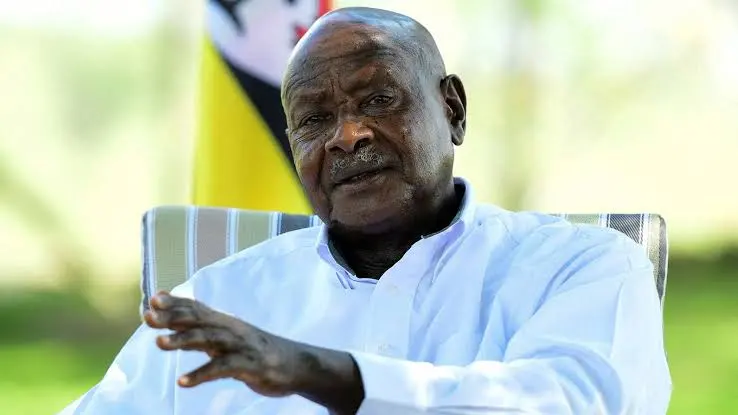
Every time President Yoweri Museveni sits down to form a new cabinet, the same fundamental tension resurfaces: he alone decides, but he never decides in a vacuum. This time around, that tension is sharper than it has ever been.
Uganda’s seventh-term president is reportedly in the final stages of shaping his post-election cabinet, and by all accounts the process is more complicated than any he has faced before. The reason can be distilled into three letters: PLU.
A movement that won seats it was never supposed to win
The Patriotic League of Uganda, the civic movement chaired by General Muhoozi Kainerugaba, Museveni’s son and current Chief of Defence Forces, was not supposed to become a political force that directly challenged established NRM figures. When PLU was launched, the thinking among many analysts was that the MK movement was really about weakening the National Unity Platform and its ability to capture the youth vote, rather than a genuine push for power from within.
But something happened in the 2025 NRM primaries and the 2026 elections that changed the calculations. Candidates associated with PLU succeeded in dislodging entrenched NRM figures, including Theodore Ssekikubo in Rwemiyaga County and Barnabas Tinkasimire in Buyaga West County. These were not fringe figures. They were known, long-serving members of the ruling establishment, and they lost to people flying the PLU flag.
PLU claims to hold an allied majority within the NRM’s central executive committee following internal party elections in 2025, which included high-profile upsets of established party figures at the hands of PLU-affiliated candidates. Whether that claim holds up under scrutiny is one thing. But even as a political assertion, it creates a headache for Museveni that did not exist in any previous term.
The lobby queue forming outside State House
The formation of the new cabinet is expected to be highly competitive, with various interest groups including religious and cultural institutions actively lobbying for representation in key ministries. Some current office holders, including Prime Minister Robinah Nabbanja, are reportedly at risk of being left out as pressure mounts to accommodate new entrants. Opposition figures from parties such as the Democratic Party and the Forum for Democratic Change who maintain cordial relations with the president are also lobbying for cabinet positions.
Into that already crowded space, PLU-affiliated MPs and activists are now making their own demands, pointing to their electoral performance as proof that they represent a constituency Museveni cannot afford to ignore. The precedent has already been set. A previous cabinet reshuffle saw PLU members Balaam Barugahara and Lilian Aber appointed to state minister positions, with Barugahara heading the Youth docket, a choice analysts saw as Museveni keeping an eye on the youth vote.
That earlier reshuffle bought some goodwill, but it also revealed the problem: every PLU candidate given a seat is a seat that does not go to a long-serving loyalist, a regional balancing act, or a party structure that has been waiting in line for years.
The father’s dilemma
What makes this genuinely unusual in Ugandan politics is the personal dimension. Museveni is not simply managing factions within his party. He is managing the political network of his own son, a man who has publicly expressed presidential ambitions, then stepped back from them, then expressed them again, in a pattern that has kept both allies and analysts guessing for years.
When Museveni appointed Muhoozi as Chief of Defence Forces, observers contended the move aimed at entrenching Kainerugaba’s influence, while others argued it was designed to clip his wings by pulling him away from active political organising before the 2026 elections. Both things can be true at once. Museveni has long shown an ability to simultaneously reward and constrain the same person.
But with Muhoozi now commanding Uganda’s military rather than its street-level political mobilisers, PLU did not collapse. It reorganised. The NRM primaries were marked by widespread disorder, violence, and allegations of systematic malpractice, with approximately 210 primary losers rejecting results outright, reflecting a political system under strain not from external opposition alone but from internal fragmentation and anticipatory positioning. Many of the winners in those chaotic primaries were PLU-aligned, and they won seats. Now they want something for it.
What cabinet formation tells us about succession
For Museveni, a cabinet has never just been an administrative arrangement. It is a signal. Who gets in, who gets dropped, who is rewarded and who is sidelined tells Uganda’s political class everything it needs to know about where power actually sits.
A senior political figure, speaking anonymously, framed the situation plainly: 2026 is not just about extending Museveni’s stay in power. It would also mean that the transition takes place on his terms. He will be in charge of managing it.
That management task is now more delicate than ever. Accommodate too many PLU candidates and Museveni appears to be endorsing his son’s network as the incoming ruling class. Shut them out and he risks fracturing the NRM at precisely the moment when the party’s parliamentary representation has already slipped from around 336 seats to roughly 300 in the 2026 elections, even as Museveni himself posted his highest ever presidential vote share.
That gap between the president’s personal strength and his party’s institutional weakness is the real story of this cabinet formation exercise. It is a gap that PLU, whatever its origins, has learned to exploit.
The chess game continues
Museveni has outlasted every political challenge thrown at him over four decades, and his ability to manage internal tensions has always been underestimated. He has shown before that he can give someone a position while simultaneously limiting what they can do with it. The appointment of Muhoozi as CDF was, by many readings, exactly that kind of move.
The question for Uganda watchers is whether the same sleight of hand works at cabinet level, when the people being managed are not just one general but a loose network of elected officials, lobbyists, businesspeople, and regional power brokers, all reading the succession weather differently and positioning accordingly.
Nobody outside State House knows how the list currently looks. But the pressures shaping it have rarely been this visible, or this complicated.