
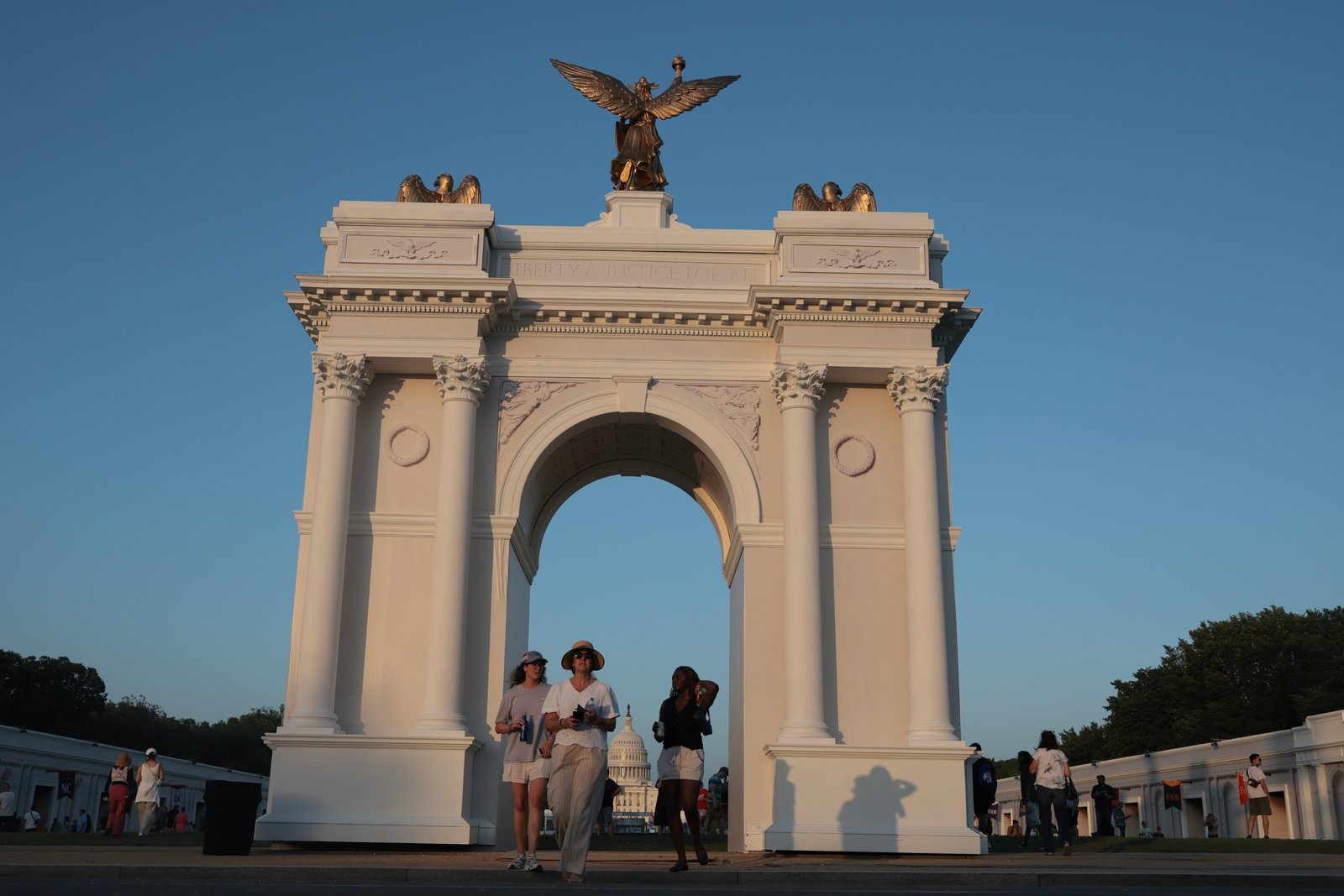
Washington, D.C. – A controversial monument known colloquially as “Trump’s Arch” could see construction begin next month despite lacking the final environmental clearance required under the National Historic Preservation Act. The proposed 150‑foot granite arch, intended to commemorate the former president’s “America First” legacy, has ignited a legal battle spearheaded by a coalition of veterans’ groups.
The project, approved in principle by the Federal Advisory Committee on Monuments, has been stalled for months due to a pending Section 106 review, which assesses the impact on historic sites and cultural resources. The Department of the Interior announced on Friday that it would issue a “conditional start‑construction order” to the private developer, citing “pressing public interest” and “significant political support.”
Veterans for Integrity, a nonprofit representing former service members, filed an emergency injunction in the U.S. District Court for the District of Columbia, arguing that the arch violates the Veterans’ Memorial Preservation Act and disrespects the sacrifices of those who served. “We cannot allow a partisan monument to eclipse the solemnity of our nation’s true heroes,” said co‑founder Lt. Col. Maria Alvarez, a retired Army officer.
The court has scheduled a hearing for 22 September. Legal experts suggest the judge may be inclined to grant a temporary stay, given the pending environmental assessment and the potential for irreversible damage to the historic landscape of the National Mall.
Supporters of the arch, including several state legislators, claim the monument represents a “celebration of American resilience.” They argue that delaying the project would set a precedent for politicizing public art. “The arch is about honoring a president who stood for the working class,” said Rep. James Whitfield (R‑TX), who introduced the original bill.
If construction proceeds, it would be the first major monument erected on federal land without full compliance with Section 106, a move that could reshape the approval process for future projects. The outcome of the veterans’ lawsuit will likely influence whether the arch becomes a lasting feature of the capital or a footnote in a contentious legal saga.